
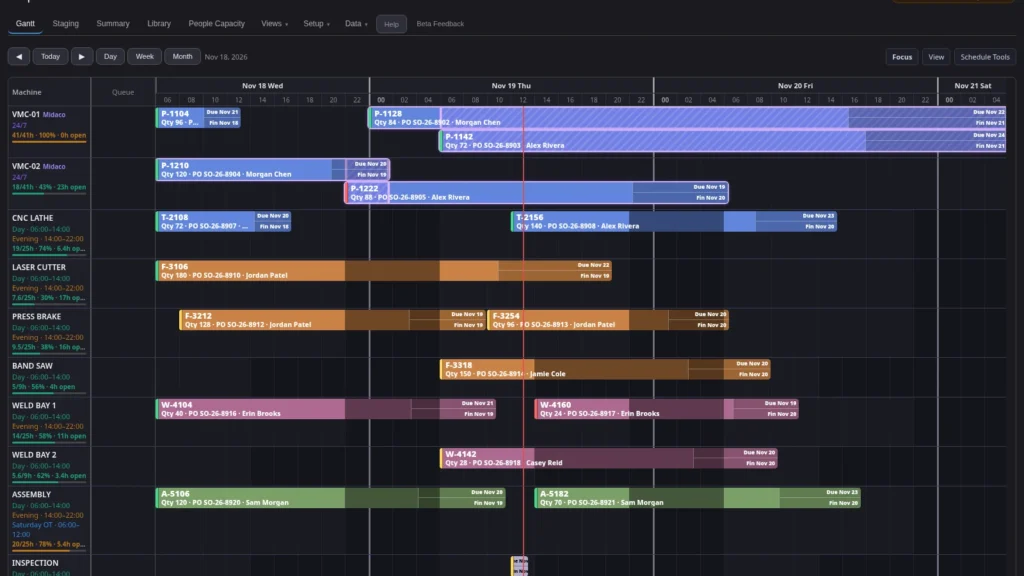
A schedule is only useful if it reflects the shop
On paper, work can appear neatly planned while machine availability, setups, staged jobs and shift limits tell a different story. The information needed to make a good decision often lives in different spreadsheets, systems and people’s heads. The result can be a full schedule with little clarity about what can actually be completed.
Start with how production really works
Shop Scheduler was designed around the realities of manufacturing rather than a generic scheduling template. The application connects job preparation and staging with a visual, interactive schedule. Machine loading, shifts and capacity are part of the planning picture, so work can be sequenced with a better understanding of the resources it requires.
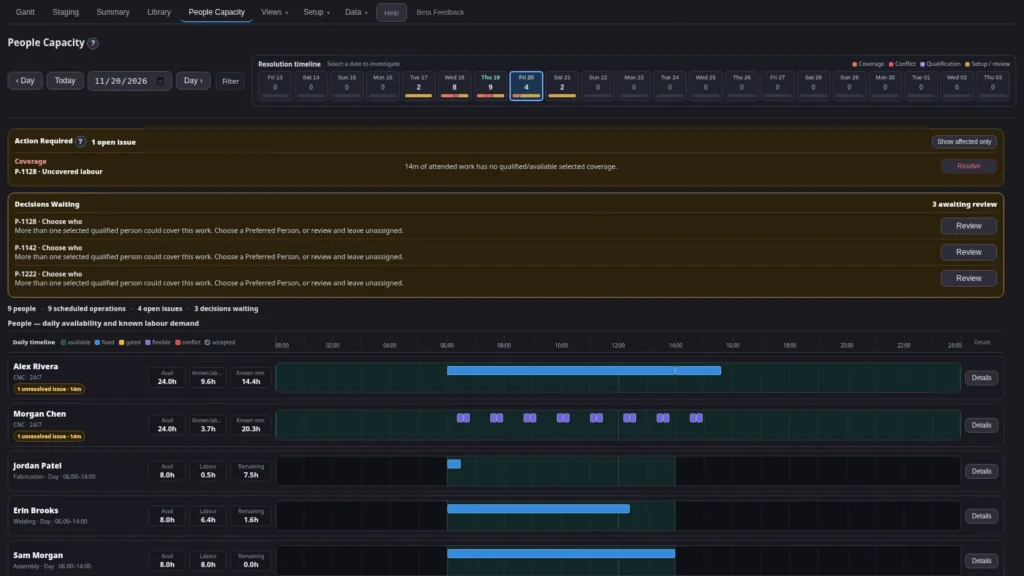
Turn visibility into usable decisions
Drag-and-drop Gantt planning, job and machine views, operational logging and production-oriented reporting make the work ahead easier to discuss and manage. Additional development includes dashboard views for capacity, delivery commitments, projected backlog and exceptions. Equipment-specific scheduling logic has also been developed for dual-pallet machining.
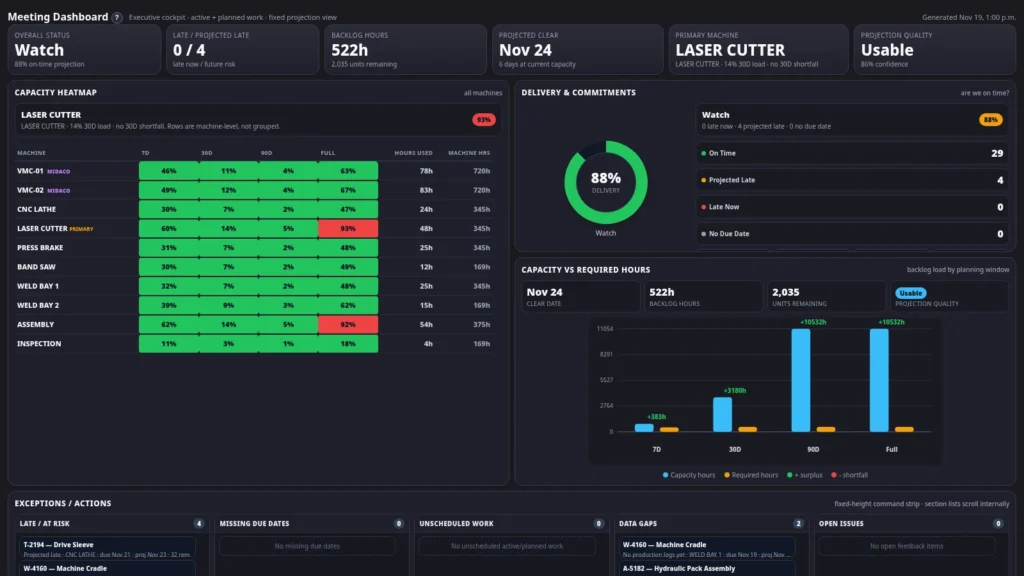
Developed in the environment it serves
This is not an abstract prototype waiting for its first real user. Shop Scheduler was developed independently and has been used for production planning in an operating manufacturing shop, where changing priorities and actual machine constraints provide continuous practical feedback.
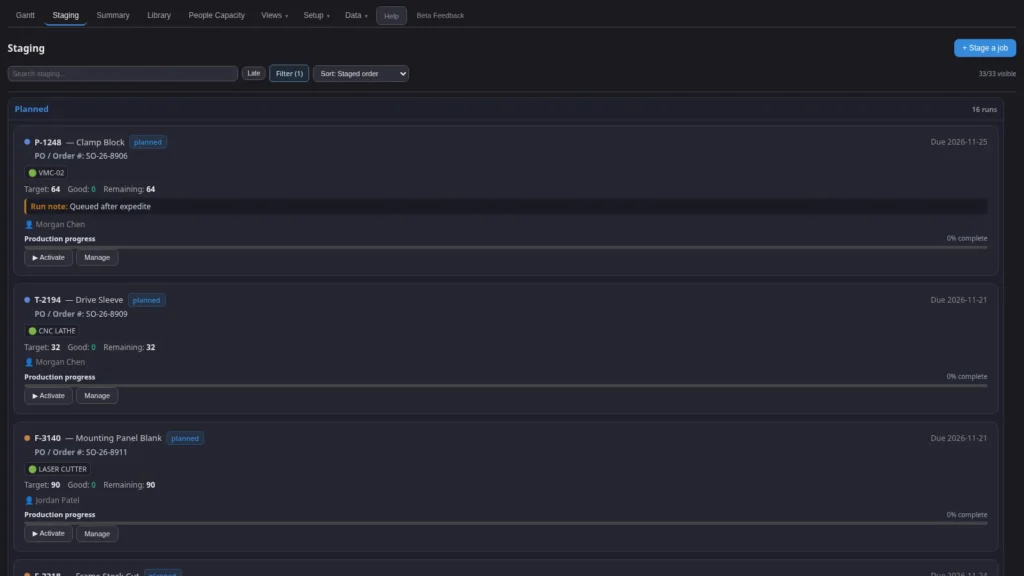
A focused next step for other shops
Convergent Shop Systems can evaluate tailored implementations based on a shop’s machinery, work patterns, reporting needs and existing systems. The opportunity is not to force a business into a generic software package. It is to give people a clearer picture of the production decisions that matter most.